1-Day Polyaspartic Floor Coatings in Holly Springs, NC
Fast-curing polyaspartic and polyurea systems for homeowners who want a durable, UV-stable garage floor and a quicker return to using the space.
Why Homeowners Choose Polyaspartic
Polyaspartic coatings cure quickly, which compresses the whole project. Grinding, base coat, flake broadcast, and topcoat can often happen in the same visit instead of spreading across several days of the garage being unusable.
- Fast return to service compared with traditional epoxy build systems
- UV stability, so the finish resists yellowing and discoloration in daylight
- Chemical resistance against automotive fluids and household products
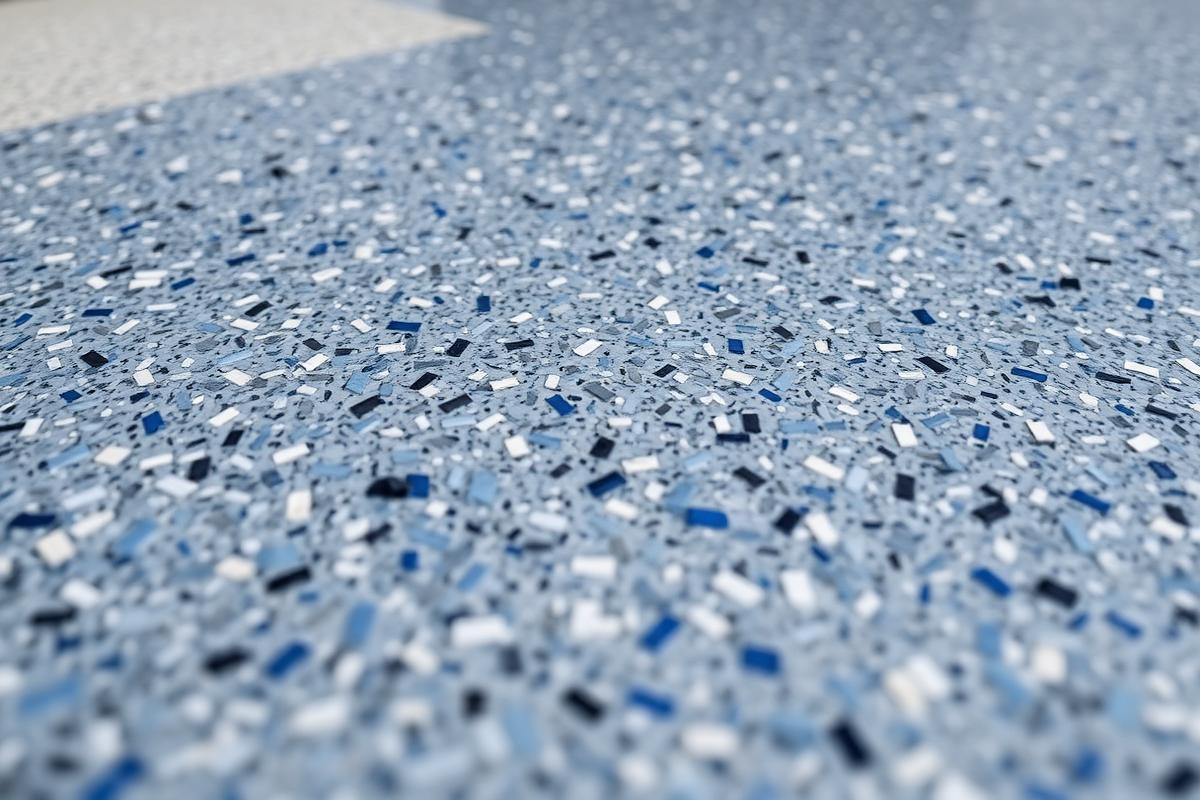
- Full decorative flake options in the same color blends as epoxy systems
- A hard, cleanable wear surface over professionally prepared concrete
Cure and return-to-service times are not a fixed number. They depend on the product system, ambient temperature, humidity, concrete condition, and the installer's recommendations for that specific floor — all of which we confirm before install day.
Polyaspartic vs. Epoxy
Cure time
Epoxy cures over hours to days depending on the formulation, so a multi-coat epoxy system usually spans more than one day. Polyaspartic cures much faster, which is what makes a same-day install realistic on many residential garages.
UV resistance
Standard epoxy tends to amber over time where sunlight reaches it. Polyaspartic topcoats are designed for UV stability, so they're the better pick for garages with open doors, glass, or any exterior exposure.
Working time
Fast cure cuts both ways: polyaspartic gives the installer a shorter working window and less room for error, so it rewards experience and good site planning. Epoxy is more forgiving to place and level.
Appearance options
Both systems accept full or partial flake broadcast, solid colors, and clear topcoats. Epoxy builds thicker, which helps visually smooth minor surface imperfections in older concrete.
Common applications
Epoxy is frequently used as a base coat and on large interior commercial slabs. Polyaspartic is common as the topcoat on residential garages and anywhere sunlight or fast turnaround matters. Hybrid systems — epoxy base, polyaspartic topcoat — are widely used for exactly that reason.
Cost considerations
Material costs for polyaspartic are typically higher, but the reduced labor days can narrow the gap. The right comparison is total installed cost for the system your slab actually needs, not a per-gallon comparison.
For a straightforward decorative garage finish, compare this with our garage epoxy coatings in Holly Springs. Business owners should start at commercial epoxy flooring, and exterior slabs are covered under outdoor concrete coatings.
Preparation Doesn't Change
A faster coating does not mean a faster shortcut on the slab. Concrete still gets mechanically prepared, cracks and pits still get repaired, and moisture concerns still get evaluated. Coating over an unprepared floor fails regardless of chemistry.
Serving garages in 12 Oaks, Trinity Creek, and across 27540 — request an estimate to talk through systems.
Polyaspartic Coating FAQs
- What is polyaspartic flooring?
- Polyaspartic is a fast-curing coating chemistry in the polyurea family. It is commonly used as a base coat, a topcoat, or both in garage floor systems, and it accepts decorative flake the same way epoxy does.
- Is it really a one-day floor?
- Many polyaspartic garage installations are ground, coated, and topcoated in a single working day. Whether that applies to your garage depends on square footage, how much repair the slab needs, and site conditions on install day.
- When can I walk on it and when can I park on it?
- Cure and return-to-service times vary with the specific product, temperature, humidity, and concrete condition. We give you the manufacturer's guidance for the system installed rather than a fixed promise.
- Does polyaspartic hold up to sunlight?
- Polyaspartic topcoats are formulated to be UV stable, which is why they hold color better than standard epoxy in garages with open doors, glass panels, or exterior exposure.
- Is polyaspartic always better than epoxy?
- No. Epoxy builds thicker, fills minor surface imperfections well, and is often more cost-effective on large interior slabs. Polyaspartic cures faster and resists discoloration. Many quality systems combine both.
Talk Through Coating Systems for Your Garage
Send a few details about your garage, patio, or commercial space and we'll walk you through coating options, preparation, and timing.